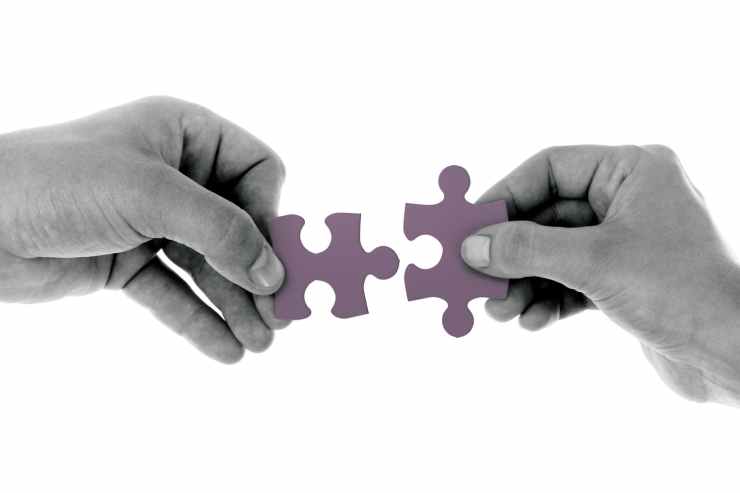
In this blog, I want to offer an experiential approach to forming your own integrative framework of practice in child psychotherapy. By now I think you will have realised that I do not intend to present my own integrative model as an ‘off the peg’ or ‘ready to wear’ framework. Instead, I hope I have inspired you to consider the various relevant and stimulating ‘pieces of material’ you already possess in terms of theory and can now begin to sew together your own integrative framework. In the spirit of this inquiry I offer below a range of questions from adapted from McLeod (2012) to help facilitate the reader in the development of their integrative framework:
• What social, political, spiritual values inform the foundational philosophy of your integrative model? E.g. what are your views on power, privilege and how these may impact on therapy? What do you believe about human development?
• What current theories are informing your integrative model? Why are you drawn to these?
• What relationship do you have to these theories?
• Are these theories congruent or do they conflict with your beliefs and values?
• How do you reconcile and integrate theories that may feel in conflict?
I would encourage writing your responses but also to drawing/making images in response. To build upon this process I offer a practice here based upon Focusing Oriented Arts Therapy or FOAT as devised by Laury Rappaport (see Laury Rappaport’s pioneering work in this area, 2008). The aim of this FOAT is to listen to the body and the unconscious to see what it has to tell you regarding your own developing integrative framework. You can do this with a peer or on your own.
Focusing-Oriented Art Therapy for Developing An Integrative Model of Child Psychotherapy
Find a comfortable position…take a few gentle breaths… noticing your breath come in your body and move out of your body…feel the support of the ground and the earth…the sky and heavens. If you have any thoughts on your mind, notice them and let them pass by like clouds in the sky. As you breathe, turn your attention inside to your body…just notice what is there in this moment…and be accepting to whatever you find…
When you’re ready, just ask,
“So what am I needing most right now to develop my integrative model?” Your mind may answer quickly but just wait…take the question down inside to your body…just wait…and listen… [Guide—wait for a signal or gently ask after a while).
Imagine that you have this in your life now…imagine what it would look like and feel like in your body to have this thing in your life now…pause…see if there’s an image, word, phrase, gesture or sound that would match that sense…of having it in your life now. If you’d like, you can move your body in the position of what it would look like or feel like to have that in your life now?
When you’re ready, ask, “So, what’s in the way?” …pause…listen inside to the body…and see if there’s another word, phrase, image, gesture, or sound come.
Now ask to the inner felt sense, What’s needed? What’s needed to bring this sense of integration?
And now ask from the inside, “And what’s a good, small step in the right direction (to bring that into your life).
Completing the Focusing round:
Take however long or short as you need. When you are ready, gently stretch, open your eyes if they were closed, and see if you would like to express whatever was significant for you in the Focusing in an arts modality…art, movement, sound, music, writing.
Take a moment to appreciate yourselves (focuser and guide) and each other for this exchange.
References
McLeod, J (2012) The Counsellors’ Workbook. Developing a Personal Approach. Open University Press
Rappaport, L (2008) Focusing-Oriented Art Therapy: Accessing the Body’s Wisdom and Creative Intelligence. Jessica Kingsley Publishers
 The Child Psychotherapist